Body Dysmorphic Disorder (BDD)

Body Dysmorphic Disorder (BDD)

Are you unhappy with the way you look? Do you believe a body part(s) or aspect of your appearance is ugly, gross, flawed, abnormal, disfigured, deformed, or hideous? Do you spend a lot of your time thinking or worrying about your physical appearance?

You constantly check yourself in the mirror, scrutinize your appearance, compare your appearance with others, use lots of beauty products, pick your skin or pull your hair, and ask others about how you look. You don’t like going out or people seeing you so, when you do go out, you cover up strategically using clothing or makeup. You have researched online about cosmetic procedures and may have sought out surgery, but none of this works - you still feel depressed, anxious, stressed, disgusted, angry, inadequate, worthless, and unlovable because of how you feel about your appearance. It’s hard to sleep, work, socialize, date, or think about anything else. It feels like an obsession, an addiction because all you can think about is your flawed appearance and how to fix it. When people tell you you’re beautiful it makes you feel worse because no matter what they say you don’t believe them - they just don’t get it. You just want to be happy. If this sounds like you, I might be a great therapist for you.
BDD Treatment

You aren’t vain. Your concerns aren’t trivial. You may have BDD, which is a relatively common and treatable mental health condition that is similar to OCD but focused on perceived flaws in one’s physical appearance. I help people feel free from BDD by helping them develop a more accurate and helpful body image using cognitive-behavioural therapy (CBT).

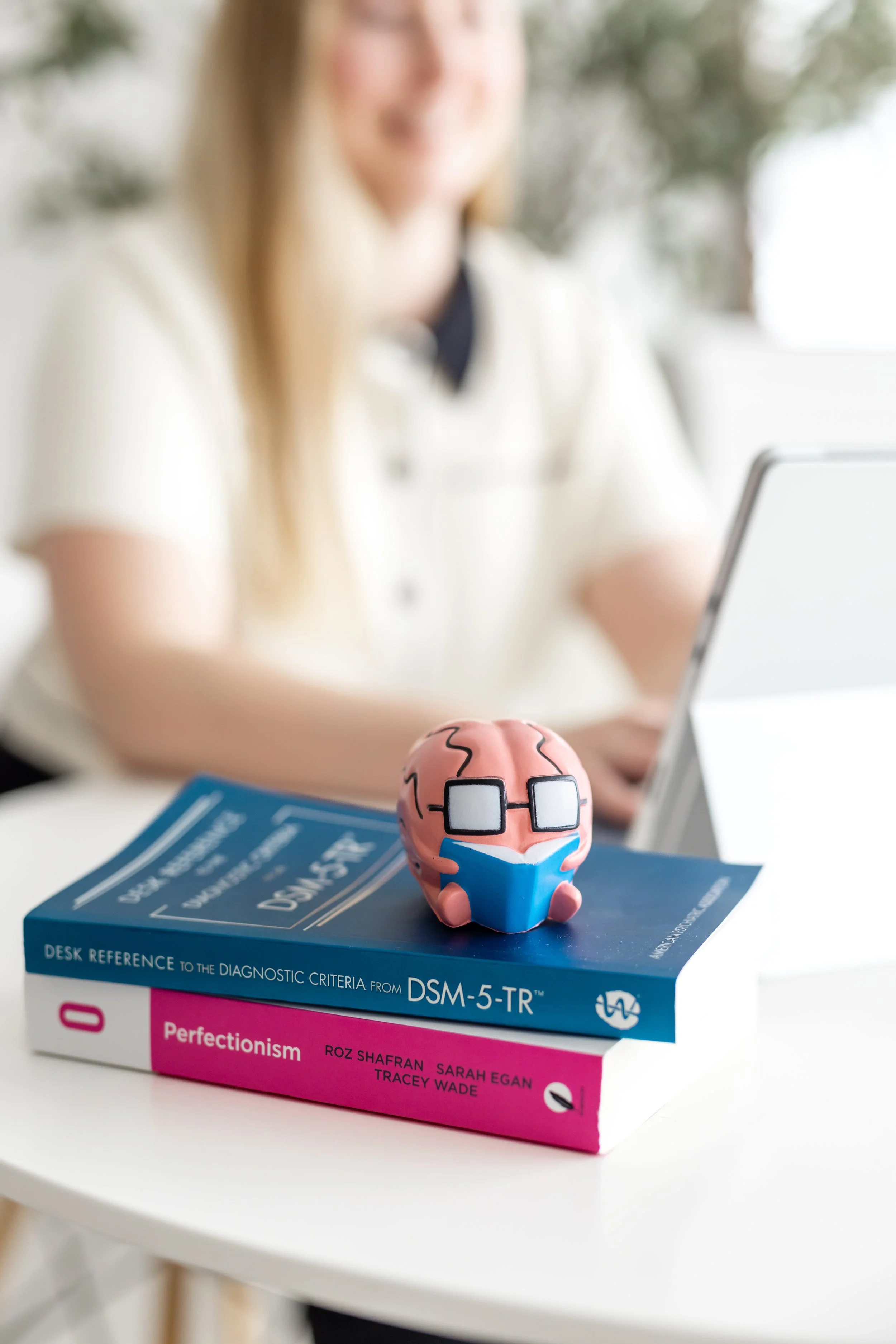
A pink brain-shaped piggy bank with glasses and a face mask on top of a closed psychology textbooks, with a woman blurred in the background working on a laptop.

Examples of some common areas of concern in BDD addressed in therapy:

  • Skin (e.g., acne, scarring, wrinkles, paleness, redness)

  • Hair (e.g., uneven hair, thinning hair, excessive facial hair, receding hairline)

  • Nose (e.g., misshapen, too large, asymmetrical nostrils, crooked)

  • Ears (e.g., pointed, asymmetrical, too large)

  • Muscles (e.g., body build is too small, insufficiently lean or thin, scrawny)

  • Other body parts (e.g., mouth, jaw, lips, forehead, eyebrows, stomach, hips, hands, feet, genitals, breasts, etc)

Ready to get started on BDD treatment?

Please don’t hesitate to reach out! I happily offer a free consultation to prospective clients to see if we are a good fit to work together